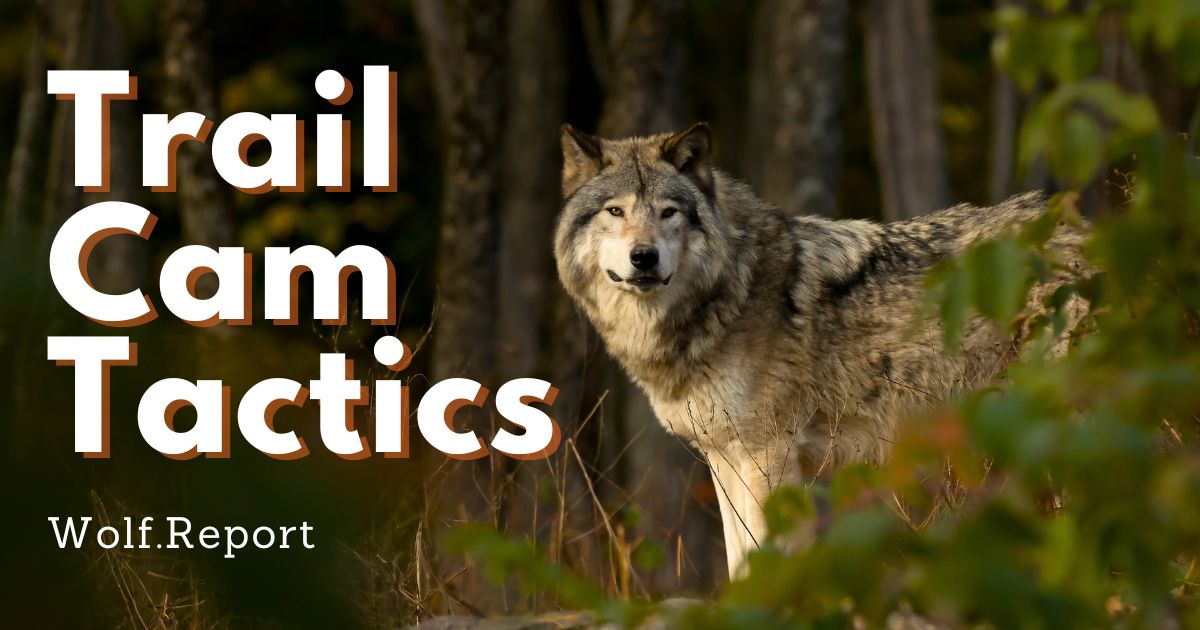
If you’ve spent time in the woods lately—whether you’re deer hunting, scouting, trapping, hiking, or checking the family cabin—you’ve probably noticed something: wolves are showing up more often, in more places, and on more cameras than ever. That’s exactly why Wolf Report exists.
Wolf Report is a growing trail camera database of wolf sightings—built primarily around Minnesota, and now starting to gain momentum in Wisconsin and Michigan, too. It’s a place where everyday outdoorsmen and women can submit sightings, trail camera photos, and on-the-ground observations to help paint a clearer picture of what’s happening across our region.
One of the biggest challenges in wolf conversations is that too many opinions are formed far away from wolf country. Wolf Report helps change that by collecting real-world documentation—especially trail camera evidence—from the folks who live it.
Every submitted report helps show patterns like:
Where wolves are being seen more frequently
How wide-ranging packs appear to be
How close sightings are happening to farms, towns, and backyards
When wolves are most active throughout the season
And importantly, it keeps the discussion grounded in facts on the ground, not assumptions.
Wolf Report’s main goal is simple: educate the public on the proliferation of wolves across Minnesota and the Great Lakes states.
That education matters because wolf management isn’t just an abstract policy debate—it’s something that touches real lives and real communities. As wolf numbers and range expand, the ripple effects can be felt across the landscape, especially by those who depend on healthy wildlife populations and safe rural living.
Wolf Report supports a well-regulated wolf management program, including hunting and trapping seasons, for one clear reason: responsible management is how North America successfully sustains wildlife.
A science-based management season helps protect:
1) Our Deer Herd
Deer are a cornerstone species in the Northwoods—important for ecosystem balance, conservation funding, and hunting opportunity. When predation pressure increases in key areas, it can impact local deer numbers, fawn recruitment, and hunter success.
2) Our Traditions
For many families, deer camp isn’t just a weekend—it’s heritage. Wolf Report stands for keeping Minnesota’s hunting traditions strong for the next generation, not slowly watching opportunity fade in areas where wolf impacts are increasing.
3) Pets and Rural Communities
As wolves expand into new areas, interactions can become more common. People deserve honest information about what’s happening and practical solutions that prioritize public safety and common sense.
4) Livestock and Working Lands
Farmers and ranchers already juggle enough challenges. A managed wolf population helps reduce conflict and supports the people who keep food on our tables and open land on the landscape.
Wolf Report is about channeling concern into something productive: documenting, informing, and advocating for management that is organized, regulated, and effective.
This isn’t about hysteria. It’s about transparency. It’s about acknowledging what more and more trail cameras are showing—and making the case that wolves, like any other managed wildlife species, require real tools and real policies that match reality on the ground.
Wolf Report works best when the community powers it. If you’ve got trail cam photos, sightings, tracks, howls, or wolf activity near your area, consider submitting a report. Every submission makes the database stronger and helps tell the full story—across Minnesota today, and increasingly across Wisconsin and Michigan tomorrow.
Because when it comes to wolf management, the people who are out there deserve to be heard—and the evidence deserves to be seen.